

Latest [Aug 16, 2024] 100% Passing Guarantee - Brilliant KCNA Exam Questions PDF
KCNA Certification – Valid Exam Dumps Questions Study Guide! (Updated 128 Questions)
The KCNA certification exam consists of 50 multiple-choice questions that cover various topics related to Kubernetes and cloud-native technologies such as containerization, Kubernetes architecture, Kubernetes deployment, and application management. KCNA exam is designed to evaluate the candidate's understanding of these topics and their ability to apply this knowledge in real-world scenarios.
To prepare for the KCNA certification exam, candidates can take advantage of a variety of resources provided by the Linux Foundation. These include online training courses, study guides, and practice exams. Additionally, candidates can participate in community forums and discussion groups to gain insights and advice from other professionals in the field.
NEW QUESTION # 54
Which style of operations are preferred for kubernetes and cloud-native applications?
- A. Imperative
- B. Declarative
- C. None of the above
Answer: B
Explanation:
https://kubernetes.io/docs/tasks/manage-kubernetes-objects/declarative-config/#trade-offs
NEW QUESTION # 55
What is a commonly used package manager for kubernetes applications?
- A. apt
- B. npm
- C. kubernetes manifest
- D. helm
Answer: D
Explanation:
https://helm.sh/
NEW QUESTION # 56
Which of the following is used to request storage in Kubernetes?
- A. PersistentVolumeClaim 'PVC'
- B. StorageClasses
- C. Container Storage Interface 'CSI'
- D. PersistentVolume 'PV'
Answer: A
Explanation:
https://kubernetes.io/docs/concepts/storage/persistent-volumes/
NEW QUESTION # 57
What are container runtimes with Kubernetes?
- A. containerd
- B. CRI-O
- C. lxd
- D. Dockershim
Answer: A,B
Explanation:
https://kubernetes.io/docs/setup/production-environment/container-runtimes/
NEW QUESTION # 58
Which statement is true about Pod Networking?
- A. All containers in a pod share a single IP address
- B. All pod requires NAT to get a unique IP address.
- C. All pod requires an external DNS server to get the hostname
- D. All containers in a pod get a unique IP address
Answer: A
Explanation:
https://kubernetes.io/docs/concepts/workloads/pods/#pod-networking
NEW QUESTION # 59
What is the use of labels in Kubernetes?
- A. All of the options
- B. It is used to assign key-value pair to an object
- C. It is used to assign a name to an object.
- D. It is used to assign annotation to an object
Answer: B
Explanation:
https://kubernetes.io/docs/concepts/overview/working-with-objects/labels/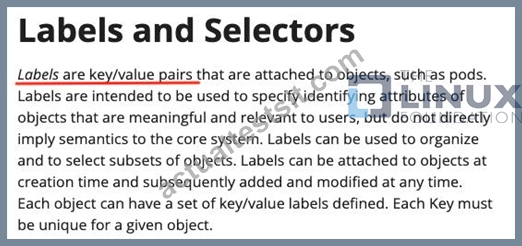
NEW QUESTION # 60
What is the default service type in Kubernetes?
- A. loadBalancer
- B. CusterIP
- C. serviceType
- D. NodePort
Answer: B
Explanation:
https://kubernetes.io/docs/concepts/services-networking/service/#publishing-services-service-types
NEW QUESTION # 61
Which project is not a dominant CNCF project in the storage landscape?
- A. Envoy
- B. Vitess
- C. Rook
- D. TiKV
Answer: A
Explanation:
https://github.com/cncf/landscape#trail-map
NEW QUESTION # 62
What is the main difference between Argo vs. Flux CD?
- A. Argo is pull-based, and Flux is push-based
- B. No difference; both are pull-based
- C. No difference; both are push-based
- D. Argo is push-based, and Flux is pull-based
Answer: D
Explanation:
AgroCD: https://argo-cd.readthedocs.io/en/stable/developer-guide/ci/#can-i-retrigger-the-checks-without-pushing-a-new-commit
FluxCD: https://fluxcd.io/
NEW QUESTION # 63
What tool allows you to create self-managing, self-scaling, self-healing storage?
- A. Rook
- B. Persistent Volume Claim
- C. Storage Class
- D. Persistent Volume
- E. Volume
Answer: A
Explanation:
https://rook.io/
NEW QUESTION # 64
What Kubernetes resource would allow you to run one Pod on some of your Nodes?
- A. DaemonSet
- B. ReplicaSet
- C. ClusterSet
- D. Deployment
Answer: A
Explanation:
https://kubernetes.io/docs/concepts/workloads/controllers/daemonset/
NEW QUESTION # 65
What does CNCF stand for?
- A. Cloud Native Container Foundation
- B. Cloud Native Cloud Foundation
- C. Cloud Native Computing Foundation
Answer: C
Explanation:
https://www.cncf.io/about/who-we-are/
NEW QUESTION # 66
What command can you use to get documentation about a resource type from the command line?
- A. kubectl explain
- B. kubectl get
- C. kubeadm get-resource
- D. kubectl api-resources
Answer: A
Explanation:
https://kubernetes.io/docs/reference/generated/kubectl/kubectl-commands#explain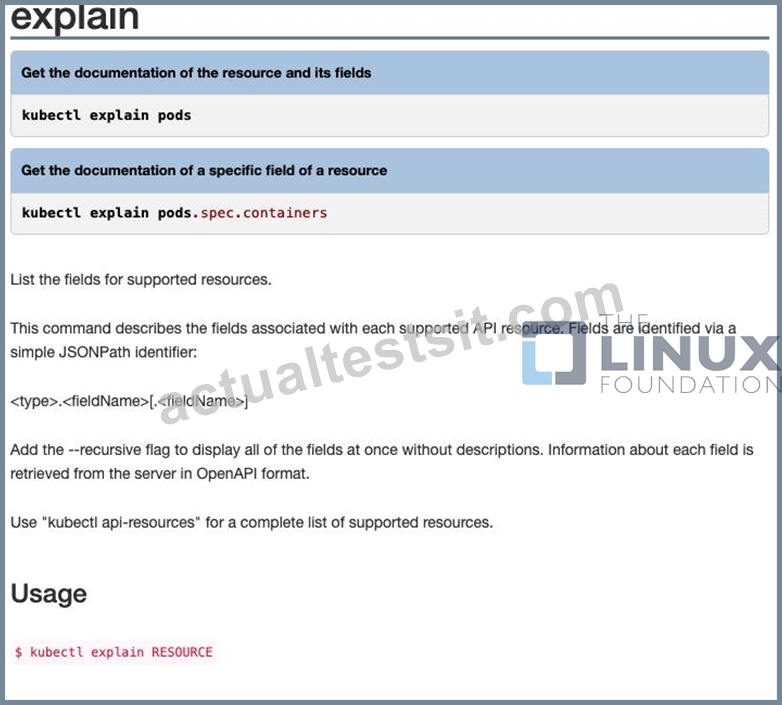
NEW QUESTION # 67
Which of the following container runtime is planned to be deprecated in Kubernetes 1.20 and high-er?
- A. docker
- B. cri-o
- C. None of the options
- D. podman
- E. containerd
Answer: A
Explanation:
https://kubernetes.io/blog/2020/12/02/dont-panic-kubernetes-and-docker/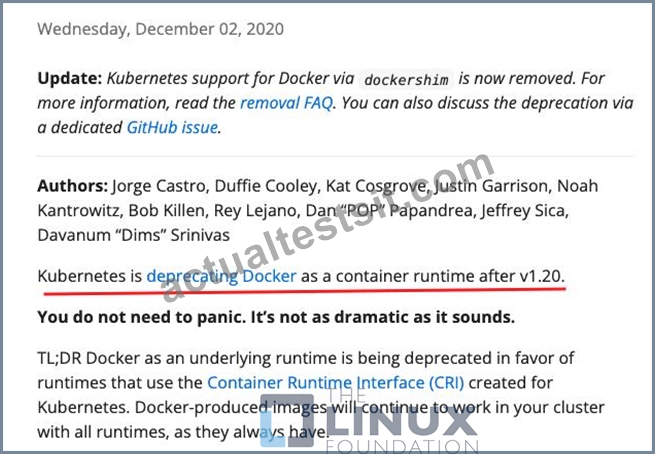
NEW QUESTION # 68
What is container runtime?
- A. The amount of time it takes a container to execute
- B. A container image format
- C. Another term of kubelet or kubectl
- D. Software that runs containers
Answer: D
Explanation:
https://www.aquasec.com/cloud-native-academy/container-security/container-runtime/
NEW QUESTION # 69
Which control plane component is responsible for scheduling pods?
- A. kube api-server
- B. kubelet
- C. kube scheduler
- D. kube-proxy
Answer: C
Explanation:
https://kubernetes.io/docs/concepts/overview/components/
NEW QUESTION # 70
Which part of a Kubernetes cluster is responsible for running container workloads?
- A. Control plane
- B. Worker Node
- C. etcd
- D. kube-proxy
Answer: B
Explanation:
Worker Nodes are responsible for executing containerized workloads.
NEW QUESTION # 71
What is OPA?
- A. Open Policy Agent
- B. Online Policy Audit
- C. Offline Policy Accessor
- D. Open Permission Agent
Answer: A
Explanation:
https://www.cncf.io/projects/open-policy-agent-opa/
NEW QUESTION # 72
What are the two goals of Cloud-Native?
- A. Slow innovation and stable applications
- B. Rapid innovation and reliability
- C. Frequent deployments and well-defined organizational silos
- D. Rapid innovation and automation
Answer: B
Explanation:
https://www.redhat.com/en/topics/cloud-native-apps
NEW QUESTION # 73
What is horizontal scaling?
- A. Moving workloads from one server to another
- B. Adding resources to existing apps and servers
- C. Adding additional replicas of apps and servers
- D. Creating a Deployment
Answer: C
Explanation:
https://kubernetes.io/docs/tasks/run-application/horizontal-pod-autoscale/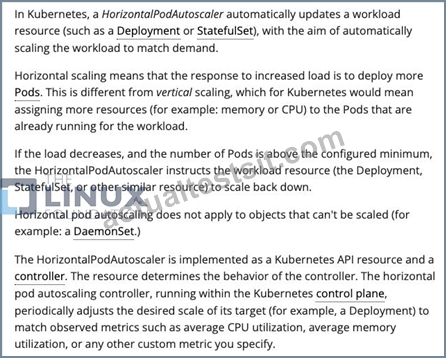
NEW QUESTION # 74
The three typical opentelemetry data is?
- A. All of the options
- B. Traces
- C. Logs
- D. Metrics
Answer: A
Explanation:
https://opentelemetry.io/docs/concepts/data-sources/
NEW QUESTION # 75
What is the command to list all the available objects in your Kubernetes cluster?
- A. kubectl get all
- B. kubectl api-resources
- C. kubectl get api-resources
- D. kubectl get pods
Answer: B
Explanation:
https://kubernetes.io/docs/reference/kubectl/cheatsheet/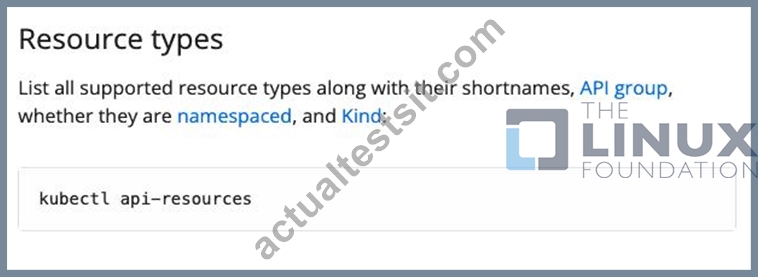
NEW QUESTION # 76
The Kubernetes API provides an interface for storing objects. Which of the following describes the type of objects stored by the Kubernetes API?
- A. ETCD
- B. Containers
- C. YAML
- D. REST
Answer: D
Explanation:
Kubernetes objects are RESTful objects.
NEW QUESTION # 77
What framework allows developers to write code without worrying about the servers and operating systems they will run on?
- A. Kubernetes
- B. Docker
- C. Virtualization
- D. Serverless
Answer: D
NEW QUESTION # 78
What is the primary interface for Kubernetes cluster?
- A. Kubernetes Api
- B. Control Plane
- C. YAML
- D. JSON
- E. Kubelet
Answer: A
Explanation:
https://kubernetes.io/docs/concepts/overview/components/#kube-apiserver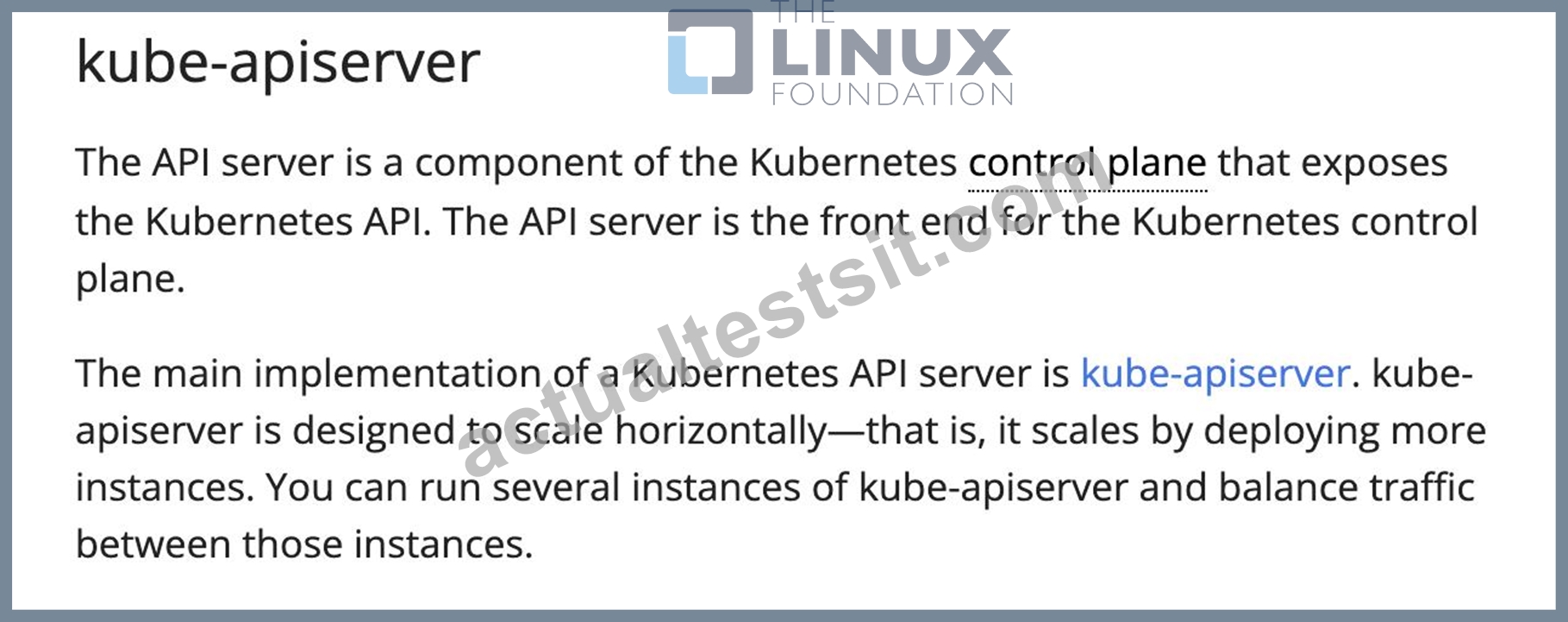
NEW QUESTION # 79
......
Linux Foundation KCNA exam is a hands-on exam that requires candidates to demonstrate their practical skills in Kubernetes and cloud-native technologies. It is a challenging exam, but it is also highly rewarding for those who pass it. By earning the KCNA certification, candidates can demonstrate to employers that they have the skills and knowledge required to succeed in this fast-growing field.
KCNA are Available for Instant Access: https://protechtraining.actualtestsit.com/Linux-Foundation/KCNA-exam-prep-dumps.html